TRT: Need to Know.
With the continuing push that men’s fertility is on the decline, alongside their testosterone levels dropping off, we are seeing a huge increase in men looking to Testosterone Replacement Therapy (TRT). For the longest time, many people thought taking testosterone was bad, cheating, or outright dumb (me included). But it’s important with anything to understand how it works in the body, allowing you to make an informed decision if it’s the right move for you. With that said, this article is meant for education, not medical advice. Let’s start with infertility.
How it Works in the Body
One of the most notable side effects of TRT is that the natural production of testosterone halts while taking exogenous (outside the body) testosterone. There are several methods, injections, pellets, creams, but the body will essentially sees that your levels are adequate, therefore stopping its process to produce its own. It’s what is called a negative feedback loop. Basically, like a thermostat in your house. Cold outside, thermostat kicks in once the inside temp is at the set point, and boom, heat turns on to balance the equation. So it starts with the hypothalamic pituitary axis.
Hypothalamic Pituitary Axis, FSH, and LH
Think of the hypothalamus as the CEO. When it senses something needs production or a kick in the pants to get going, it sends an email to the pituitary. Specifically to testosterone, it “emails” out GnRH (gonadotropin-releasing hormone) to the pituitary. Think of the pituitary gland like the regional manager. It gets the email, figures out what hormones need to be created and where they need to go. There are several hormones that develop from here, but specifically to testosterone and reproduction, it is Luteinizing Hormone (LH) and Follicle Stimulating Hormone (FSH). These fellas travel down the Hypothalamic Pituatary Testicular Axis (HPT) to then produce testosterone and spermatozoa (sperm) in the testicles (testes). How do they accomplish this?
Cholesterol is Important.
Luteinizing Hormone (LH) attaches to receptors on the Leydig Cells. This starts a cascade of enzymes and mechanisms to create testosterone. The quick version of it starts with ATP (adenosine triphosphate), which is the body’s primary energy currency, then ends with cholesterol mobilization and steroidogenesis. Therefore, leading to the production of testosterone. As mentioned in several blogs on this page, cholesterol is not the evil it’s made out to be. It is heavily needed in many processes in the body, so think twice before popping a statin. Now that we have an overview of it, here’s why it’s important.
How We Measure Test Levels
The testosterone in the testicles is 40-100x more potent than the circulating (serum) testosterone we see in the blood levels. Why? Because supraphysiological (way above normal) levels are needed for spermatogenesis (sperm creation). The extra potent T (testosterone) can then do what it needs to for the process, and the excess is secreted into the blood. And that’s where we find out serum levels on a blood panel. What should you be getting tested on those panels?
Biomarkers and Blood Panels
We undervalue the benefit of getting proper blood panels, and this isn’t talking about the recent lipid panel you got from the primary care doc. There are important markers on there, but it’s not enough. It’s like reading a headline and saying, “That’s good, I don’t need to know the details.” Most panels that are worth the information are paid out of pocket and range from $300-$500. WOW, so expensive. Well, some people spend more than that in a month on trips to the bar, their vehicle payment, or all the streaming platforms combined.
Worth the Investment?
Another fun fact regarding expenses, for those looking for freedom in retirement, here’s a fun stat, Fidelity link here, found that when retiring at age 65, and an average life expectancy of mid-80s, individuals will likely spend $172,500 out-of-pocket on health care for the rest of their life. Mostly during retirement. Fidelity, of course, recommends planning for that and opening an HSA with them. Fine, but how about we look at this measly couple hundred hundred-dollar blood panel as an investment into your health and vitality for life. Prevent hundreds of dollars a year going to prescription meds, thousands of dollars for visits, check-ups, and insurance co-pays. Off the rant, back to the panels.
Total Testosterone, Free Testosterone, Sex Hormone Binding Globulin, Albumin, and Estradiol.
There of course are plenty more we could look at, but for the case of hormones, these will be key. Mind you, all “normal levels” are an aggregate of millions of people over the years doing blood draws. Are the typical people who are required to get panels done the epitome of health? More likely than not, no.
Hormone Reference Ranges:
The reference ranges below are typical for a middle-aged male (30s). Here’s the lowdown:
- Total T – This is the serum level of total testosterone in the blood.
- “Normal Levels” 300-1000 ng/dL
- Free T – This is the amount of unbound T that is free to bind to Androgen Receptors on the cell, often touted as the important number. But it’s more nuanced than that.
- Levels, 5-21 ng/dL. Make sure you look at the unit of measurement on all your markers. Sometimes labs give them in picograms/milliliter.
- Estradiol (E2) – A type of estrogen (there are 3), this is the key one to look at. A test of “total estrogens” is not a great marker. Estrogen (E2) is very important for bone density, mood, and joint health in men and women. You should not tank your levels (ie, with an aromatase inhibitor, more on that later).
- Levels – 12-50 pg/mL. It would be less than ideal to tank the levels to single digits.
- SHGB – A glycoprotein made by the liver. The main job is to bind tightly to sex hormones like testosterone (T) and estradiol (E2) in the blood. This traps them, making most of those hormones inactive (bound form), so it doesn’t cause chaos everywhere.
- Only 1–2% of T or E2 floats free (unbound) to do its work on cells (building muscle or regulating mood). It regulates how much active hormone reaches your tissues. High SHBG? Less free T/E2 available leads to low energy. SHBG acts like a bouncer at a party, guiding excess sex hormones (like testosterone and estrogen) in your blood so they don’t flood your system and cause an internal state of “The Jersey Shore” (chaos and drama)
- Levels – 10-57 nmol/L
- Albumin – A protein made by the liver, and the most abundant protein in the blood. A taxi for hormones, drugs, and nutrients, from the liver out to the body. It has a loose bind on serum testosterone levels.
- Levels – 3.5-5.0 g/dL
How to Calculate and interpret Levels of Testosterone
So why these specific labs? If our goal is to understand our hormone levels, we take these markers as a way to see usable, or biavaible, testosterone levels. Then we put them into the Vermeulen Method calculator.
You can use a free calculator linked here. Once we see this, it gives us an idea of what our body has bioavailable. And why do we want testosterone?
Benefits of T and How it Effects the Body
This hormone comes with a litany of benefits. One of the greatest and most noticeable for people is the mood boost. Testosterone has a direct correlation to Dopamine, a neurotransmitter that is associated with our reward system, motivational drive, and cognition. Remember back to the teenage years when you would move heaven and earth just to get a young lady’s phone number? Your motivation was through the roof, alongside your testosterone. And research shows it isn’t just boosting the synthesis of dopamine, it’s tuning it in our body. What aboud building muscle?
Anabolic Muscle Building from Test
Anabolic is the term we use for “building” in the body. A constructive metabolism toward muscle, typically. Testosterone affects this via muscle protein synthesis. It’s essential to allow more amino acid chains to form more protein for muscle building more effectively and a larger scale. Men have greater levels of testosterone than women, and therefore have more muscle. And when men lose levels of testosterone, the catabolic, or breakdown of muscle, effects happen rather quickly. So when having adequate levels, we see more capability for lean muscle mass and the aspect of quicker, less painful recovery. This also plays a role in faster healing.
How Does Test Increase Healing in the Body?
Testosterone anabolic affects directly ramp up healing through tissue repair at the cellular level. Injuries like tears, fractures, or wounds demand more protein for building. Studies show adequate levels accelerate healing of skin, muscles, and bone by 20-50% It does this by modulating cytokines (inflammation messengers), reducing inflammation, increasing growth factors, and providing better strength for remolding of tissue.
When individuals have inadequate levels of testosterone, ie, hypogonadal or in andropause (age-related decline of hormones in men), healing becomes an ultramarathon, with less effective recovery. We all too often just chalk it up to “getting old”. What can you do? Take a testosterone boosting supplement!?
Should I Take a T Booster?
There is research that shows there are compounds that can directly or indirectly raise testosterone, although you won’t be moving the needle very much. You may find some effects, and add in that the placebo works 30% of the time (up to 60% in some studies), we find that most of the things are potentially increasing T, but only a small amount.
Tongkaht Ali:
Perhaps the most echoed in the “bro-fluencer” world, can have effects, lowering the affinity for testosterone to bind to SHBG, therefore raising bioavailable T. Many T Boosters have this ingredient plus several more. Some show raising testosterone in trials in men, some in rats. In any case, raising test levels at best by 30% (according to research) and going from 500ng/dL of total to 600. If that is worth a hefty price tag per month for you, by all means. For comparison, being on T can move your from 500 to maybe 900. But it all depends.
Do these supplements have a place? Potentially. Again, andropause and hypogonadism are brutal for men to endure. These T Boosters would have a greater effect on them, potentially making a noticeable life change. But to the regular lad, probably not a noticeable difference for the cost of the product. Up to you. Where do you invest your time and money?
Number One Thing Crushing Testosterone?
Number one underestimated thing that decreases not only testosterone, but disregulates dopamine and desensitizes receptors would be alcohol. A recent study shows that alcohol consumption overall is related to significant reduction in circulating concentrations of total testosterone.
And the effects on dopamine (remember the motivation and reward system) can be irreversible with chronic consumption. Even to the tune of 3 or 4 beers after work to “relax”. Alcohol has its place, and most of the world uses it. But its effects are not something to disreguard.
Anti-inflammatory Drugs, the Secret Test Crusher.
Wildly enough, no one seemed to tell us that NSAIDs have a dramatic effect on testosterone. Some people pop one daily like a multivitamin. The effects of these anti-inflammatory drugs are being more deeply studied now, revealing they’re not as innocent as claimed. In this blog, I share how it effects men and women’s infertility and testosterone levels.
It effectively desensitizes the Leydig cells in the testes, causing compensated hypogonadism by lowering the ability for these cells to uptake Luteinizing Hormone (LH) and produce testosterone. Effects took place only after 14 days. Not something to overlook.
What to be Aware of When Starting TRT
Alright, so if starting TRT, what should we be aware of. Well, anytime you introduce exogenous (outside the body) testosterone, your body will see that there is enough circulating in the body, therefore, it downregulates its own production. If there are adequate amounts, why do more work? What does this lead to?
Testicle Shrinkage on TRT
Tesicular atrophy (wasting away or degeneration of tissue) will occur. Much like muscle, if you don’t use it, then atrophy will occur. Subsequently, the testes shrink since they are no longer needed to produce T. Adding in the effects on spermatogenesis (generation of sperm), you will more likely than not have near zero level sperm counts. There are men who have conceived while on test, so don’t use that as the foundation of living a risk-free sex life. But if trying to actively conceive, or planning to at some point. This is going to significantly drop your potential. Are these effects forever?
Will My Body Rebound if I Come Off?
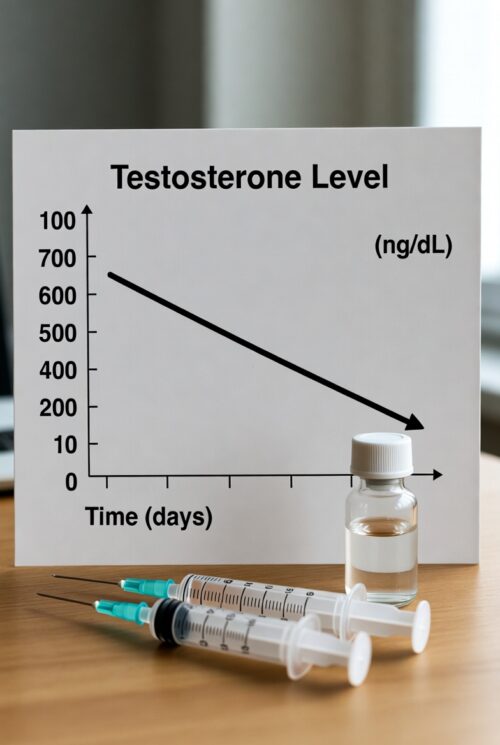
If you decide TRT isn’t all it’s cracked up to be after starting, or started young and want to now have a family, the good news is most men will recover to their natural (endogenous) production of T and sperm. To caveat, this is not true for every person – dosage, time on it, age, health, drinking, nutrition, and sleep all play a role in the bounce back. Most men have a significant crash after coming off for several weeks to months, but potentially can recover up to 96% of their levels after 6 months.
Depending on how well you treat your body could take up to 24 months for a 100% recovery. There are adjuncts that assist in the recovery, like Human chorionic Gonadotropin (HCG) of Selective Estrogen Receptor Modulators (SERMS) like clomind or enclopmihine, to boost back quicker natural production. Often, they are included in the TRT protocol to prevent testicular atrophy and preserve fertility. Of note, they add a high cost to the protocol. Speaking of which, how much does it cost?
Cost of TRT
Depends on the clinic and source. If you go to one of these cookie-cutter clinics and pay a budget price every month, you are probably not getting the best source of testosterone, and it is more likely to be a “tailor to the masses” approach. Which has significant risks. Some men never recover from taking it and have to be on the rest of their lives.
That’s why education is important and not just jumping to the cheapest, easiest route. And that’s the larger issue with these clinics. They are concerned with you signing up and payment, not your health protocol. That’s why I highly suggest talking with a reputable Doctor in the hormone replacement industry, or a knowledgeable health coach. Some of these coaches understand this on another level, without the MD or degree. Don’t rely on a guru influencer, and not all providers are experts. Source matters, delivery method matters, and education matters.
Seed Oils are in Our Food, and Our Test
If you get the cheapest version, you are probably getting a testosterone with a carrier oil made from seed oils. Many men have side effects from this. Just like cheap food, cookie-cutter clinics buy the cheapest testosterone with seed oil as thte carrier. Leading to higher side effects to including painful lumping at the injection site (higher viscosity gates stuck in the tissue), rash, acne, and oxidation.
Seed oils are budget-friendly for companies to make bigger margins. Know your source, and this isn’t something to cheap out on. If you’re struggling to afford your overpriced truck payment every month, TRT shouldn’t be first on the list to add to the bills. Now that the finances talk has been addressed, what about hair loss?
Does TRT Make You Bald?
Testosterone gets converted to dihydrotestosterone (DHT) by the enzyme 5α-reductase. DHT has a tighter binding to receptors than testosterone and therefore is more anabolic. Specifically on the sites of hair follicles and the prostate. How does it affect balding?
What happens: DHT binds to receptors in your scalp’s hair roots (dermal papilla).
The Problem: shortens the anagen (growth) phase, prolongs the telogen (rest phase). Hairs shrink and thin over time (called miniaturization). These tiny hairs lose strength and can’t punch through the scalp’s surface anymore. They stay trapped below the skin, looking like peach fuzz instead of full strands.
Who It Hits: About half of guys by age 50, thanks to genes, baldness often runs in families.
Look around at Christmas. Do you have to wear sunglasses from all the light reflecting off heads at the table. Or is your cousin’s boyfriend sneezing from an allergic response to the amount of hair floating in the room? TRT could be casual of balding, but in reality, if you’re going to be bald, your fate is somewhat sealed. TRT may quicken the process, and at super high levels, it’s more likely to lead to a smooth dome.
Why Do Aromatase Inhibitors Get Prescribed with TRT?
Something to be aware of, too, oftentimes men get prescribed an aromatase inhibitor (AI) in their TRT protocol. This is not always the best approach. Aromatase is an enzyme that converts testosterone into estradiol (estrogen). If you plummet your numbers of estradiol to single digits, you are now decreasing bone density, your joint health, and your moodiness could have effects on relationships.
Estrogen is Needed in Men
Estrogen plays a role in the synthesis of serotonin, our “mood” neurotransmitter. If you crash your levels, you are more likely to be a curmudgeon. Contrary to popular belief, this can be the cause of your emotions, not high levels of test. Of course, there is nuance and higher levels of test, which cause higher levels of DHT, which then correlates to the “roid rage.” But typically that is at supraphysiological levels. In reality, AIs aren’t a great go-to when you like having good joints and not being a moody ape.
Educate yourself on TRT and Seek Knowledgeable Guidance
The point of all of it is, know what you’re doing to your body. Know that businesses often don’t have our health in their best interest. And this isn’t a switch you can just decide to do one week and be done the next. It is incredibly beneficial for the body to have adequate levels of testosterone, and many men will benefit from it. This is a phenomenal, life-changing hormone needed in the body.
Don’t Jump On Just Because Your Bro Said To
But that doesn’t mean have FOMO, create more stress for yourself, and justify why you should be on it at age 24 (unless truly needed). Also, relying just on lab panels isn’t the answer either. Symptoms are key indications, alongside lifestyle. If you can’t commit to the basics of cutting out garbage food, losing weight, and you can’t put down the beer, best not to start with TRT. You’re probably tired due to a lack of quality sleep and have nutritional deficiencies. On top of all that, we need to resistance train. Exercise is undoubtedly a game-changer for everyone’s health and life.
TRT Helps Many Men Get Their Life Together
That being said, there’s always a devil’s advocate to each discussion. Oftentimes, men who can’t lose weight, or find the motivation to get in shape, or quit drinking, get on testosterone, WITH GUIDANCE FROM A COACH OR PROVIDER. And this is a game-changer. They start making astronomical improvements in their health and lmany aspects of life. They finally find the motivation to get up and get after it, be in a better mood, and crush their goals. Something to consider. Especially as we age, being on testosterone is shown to be beneficial for living a vital life.
Testosterone is a Benefit to the Body. Usually Having too Little is a Bigger Issue.
The stigma of testosterone is bad for heart health or causing prostate cancer has been disproven by many studies. Our concern now should be the overprescribing of poor-quality testosterone. And a lack of oversight from individuals who don’t understand the mechanisms of action in the body.
Education is Key for Your Decision
Now that you have a foundation of what it is, you can better create your own perception of testosterone and decide what is most beneficial in your life.
If you have made it to the end, you are a stud. Props to you because it is a lot of information. Testosterone is truly a wonderful hormone, and we should understand how it can enhance our health and ultimately our lives.
Blood Panel Review
If you have more questions, want health guidance, or are looking for a blood panel review, shoot an email to info@solutions2wellness.org
We can dive deeper into hormones and determine if TRT is right for you.