
Testosterone is important for men and women.
Testosterone is necessary and responsible for many things in the body. Men, it’s your primary sex hormone. Women, you have it as well, at a lower level, non the less still just as important in your health. Why is it important though? What does it do? And is it going to make you charge at someone like a silverback gorilla? Short answer is no. So then, are you tired more than normal even thought you follow Huberman’s sleep hygiene to perfection? Perhaps you have no sex drive but once had the libido of the Greek God Zues (he had a lot of kids). Or something else along the lines of your mood is off, your sore from working out and its become harder to recover. Or you hit a plateau and can’t break through. Has confidence been dwindling and choice has become a new challenge? These are all things that are affected by inadequate testosterone. And when these things are occurring for you it’s time to make a change. Let’s talk how.
Testosterone is a wonderful hormone. It does things for our body that many other things cannot. And as we age, the amount our bodies produce is much less. And to those that say it is dangerous, the most pervasive and fear-mongering myths that’s haunted testosterone for decades is the phrase “testosterone will give you prostate cancer” (or variations like “testosterone fuels prostate cancer growth”). This scare tactic stems from an outdated “androgen saturation model” from the 1940s, which suggested that higher testosterone levels directly promote prostate cell proliferation. Deterring countless men from seeking legitimate treatment for hypogonadism despite overwhelming evidence of its benefits for energy, mood, muscle maintenance, and overall quality of life. In some cases, a lower level of testosterone showed correlation with higher likelihood of prostate cancer, suggesting that restoring normal levels might even be beneficial under monitoring. And women, if you have issues with these things and are perimenopausal or post menopause, there is high potential you would benefit from treatment for low testosterone. Why? Because after menopause you are effectively making significantly less hormones. And the low amounts in anyone lead to changes that effect all aspects of life. Let’s look at mood.
Serotonin is your mood regulator neurotransmitter. The natural “chill pill” if you will. And is directly affected by many factors including hormones, and heavily impacted by what you eat (a interesting topic in the near future). Some may refer as a hormone which it can relate to in the tissue, but in essence it is a neurotransmitter. Now that we got through all that, how does testosterone effect it. Glad you asked.
• Prefrontal Cortex (PFC): The “Boss” of Your Brain
What it does: This front-of-the-brain spot is like your internal CEO. It’s in charge of planning, controlling impulses, and keeping emotions steady so you don’t overreact to stress.
Testosterone’s role here is fine-tuning serotonin transporters (think of them as “cleanup crews” that recycle serotonin after use), making emotional regulation smoother. Result? Better focus, less anxiety, and smarter choices under pressure.
• Amygdala: The “Alarm System”
What it does: Buried deeper in the brain, this is your built-in smoke detector for threats. Your amygdala flags danger (real or imagined) and triggers fight-or-flight.
Testosterone’s role: It dials down the over-reactivity and strengthens “wires” connecting the amygdala to the PFC, so the alarm doesn’t blare unnecessarily. Plus, it tweaks serotonin for calmer responses. Outcome? Less knee-jerk fear or anger; more chill in stressful spots.
• Boosts Dopamine Production and Release
Testosterone signals brain cells (via androgen receptors) to crank out more dopamine, especially in reward hotspots. This surge makes everyday wins feel bigger, firing up motivation for goals, social status, or even exercise. Low T? Dopamine fizzles, leading to that “meh” rut with low energy or flat joy. Restoring levels flips it, sparking more physical activity, confidence, and that inner dog within.
So if you have lost spark and interest, feeling way more moody than usually, and have ramped up anxiety and lack decision making confidence, a blood test should be in your future ( and in all honesty, everyone should to know a baseline, especially for aging).
Muscle protein synthesis: “Low T” also will disrupt muscle protein synthesis, or the ability for your body to grow lean muscle. And at this point in time, the research is quite profound on how beneficial muscle mass is to our bodies, and how it will assist a vitality of life while we age. It binds to the androgen receptors in the muscle cells and recruits satellite cells for stem cell activation. In all of this dumb jumbo, it means it helps build muscle mass, and prevent muscle breakdown. A key importance in women, who have highly occurrence in osteoporosis. I would argue that anyone would enjoy a more lean physique with the benefit of being active, especially in the later years of life.
Fat Burning: Here’s a viral topic since the days of old. Lower testosterone levels ramp up fat storage, and adequate levels? You guess it. Melt the fat. Specially visceral fat (belly fat), which is the biggest worry because it literally wraps around vital organs like your liver, pancreas, heart, and intestines, cranking up health risks way more than the pinchable subcutaneous fat under your skin. Testosterone cranks of lipolysis (fat breakdown) and even shifts your body from storage of new fat. Great one, two punch testosterone. The reduction of visceral fat is crucial in preventing cardio vascular disease and diabetes.
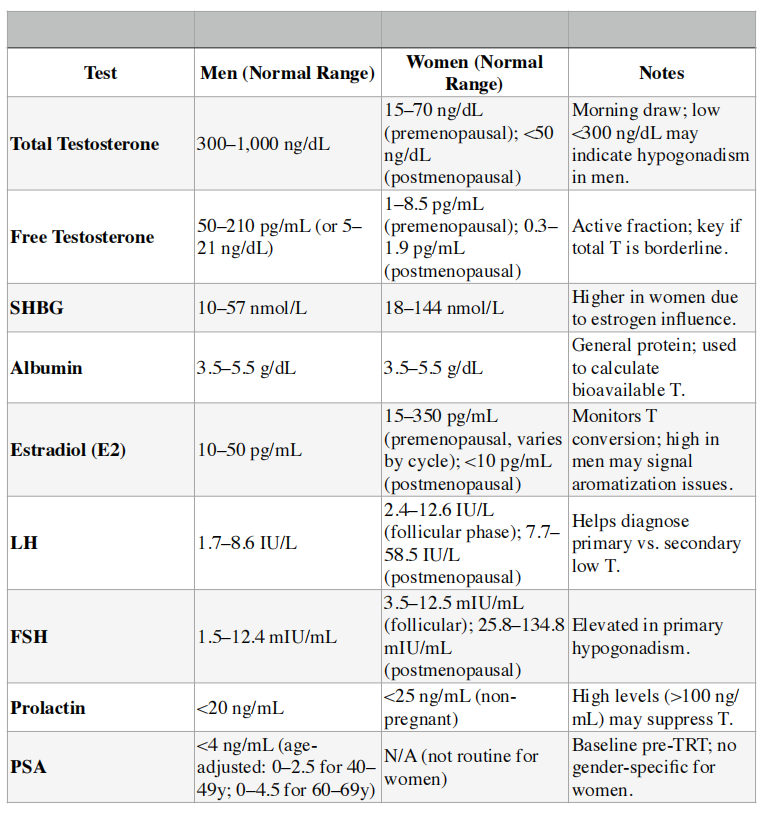
How do you find out if you are low on testosterone? You see if you have any of the above symtpoms and talk to your doctor for a work up. They will probably pull a typical lab with no hormone markers, they just look at cholesterol. Which brings up another valid point. Our society has become obsessed with diminishing cholesterol, and every year the requirements to jump on a statin grow to a larger inclusion. Some will benefit from this sure, but its not a cure all like we’re trending toward. Cholesterol is needed for many things in the body, especially the synthesis of hormones like testosterone. Lifestyle changes to nutrition and food quality will drastically disrupt the likelihood of chronic disease. So you can ask for test specifically giving some keywords from the symptoms above like: lethargic, low libido, memory issues, erectile disfunction, lack of confidence, irritability. These are a good start. And if not, go to do you own either with a functional health clinic or pull your own labs. You’d want to start with these
Core Tests (The Essentials)
Total Testosterone: Measures all T in your blood (bound + free). It’s the starting point for diagnosis. Do it twice on separate days to confirm.
Free Testosterone: The unbound, “active” T that does the work (only 1-2% of total). Tells you what’s available for your body to use for the benefits we’ve discussed. It’s key for folks with obesity or aging where binding changes.
SHBG (Sex Hormone-Binding Globulin): The main protein that ties up 50% of your T, controlling how much free testosterone you have. High SHBG (from liver issues or aging) can hide low free T. Measure to calculate bioavailable testosterone.
Albumin: Another binding protein (40% of T, looser grip). It’s often used in formulas to estimate free T (with total T + SHBG).
Estradiol (E2): The most important of estrogens to test (total estrogens doesnt give a great picture especially in men). In women, estradiol is the powerhouse estrogen driving the menstrual cycle, bone health, and mood. produced mainly by ovaries. Overproduction can reduce the effects of testosterone and have negative effects in both men and women.
First optimize lifestyle.
All this to say that you shouldn’t jump straight to hormones. There are plenty of non ethical, cookie cutter clinics nowadays that toss men and women on random doses of hormones, without looking at the proper blood levels or even doing the proper testing. (If you are on hormones or going on them, the most accurate way to see the levels of free and total testosterone, and estradiol is through Liquid chromatography–mass spectrometry (LC-MS) testing in serum blood samples). That being said most people benefit from lifestyle changes.
Testosterone dips with age or bad habits, but tweaking your daily routine can nudge levels up 10-20% or more without hormone replacement. Focus on these evidence-backed pillars (sleep, exercise, diet, etc.) for the biggest needle drivers. Aim for consistency. Results show in weeks to months. Good things take time, we are too concerned with instant gratification.
1. Prioritize Sleep
Get 7-9 hours of quality shut-eye nightly. Poor sleep tanks T by up to 15% in just one week. It messes with hormone release during deep REM cycles. Tip: Dark room, no screens an hour before. Naps under 30 min if needed.
2. Resistance Training
Weightlifting (squats, deadlifts) or high-intensity interval training spikes testosterone short-term, but builds long-term progression. Aim for 3-4 sessions a week, 45 min for weight training. And HIIT, that can be done in 8 minutes if you push yourself. Give “tabata” a google. Compound movements in large muscle groups are great, but at the end of the day, there are profound benefits from weight training in general. Just get into a consistent routine and build muscle.
3. Balanced Nutrition
Eat plenty of healthy fats: avocados, omega 3’s, extra virgin olive oil, grass-fed beef, greek yogurt. Since cholesterol is T’s raw material—diets with 30-40% fats from whole sources boost production. Protein is benfical, but you can do without the powders. Just eat whole foods, its better. The protein powder on most shelves is a chemical, hidden ingredient carpet bomb for your body.
4. Manage Weight & Body Fat
Drop extra belly fat through calorie control + exercise; obesity converts testosterone to estrogen, but losing 5-10% body weight can raise T by 10-15%. It’s a cycle: Higher T helps burn fat, so start small.
5. Cut Stress (Cortisol)
Chronic stress pumps cortisol, which crashes testosterone. Great ways to cut this are breathing techniques like box bretahing. Getting of social media is a great way to lower cortisone. Go outside and walk, or do something in the out of doors. Exercise increases this momentarily but in a healthy way, that then proactively helps manage it in the body.
Cut out alcohol. This destroys your sleep and disrupts all things in the body. You will feel drastically different. If you can’t stop drinking, you hormone production will be chronically disrupted. Add in anxiety, stress, wet pants, the list goes on. Alcohol is truly a poison for our bodies. If you want to excel in things, you can find the will to drop the habit.
You Decide.
So you choose. Create a better life for yourself and as a result for others. Understand your body a create good habits. No one should jump straight to hormone replacement before discussing with a knowledgeable doctor of hormones, and we should have a brief understanding of how it all works. In today’s influencer society, we see too many young men jumping on testosterone way too quick. Men are a testosterone power factory when in their teens and twenties, and for some men beyond. There is massive benefit for many people to be on hormone replacement if warranted, so we should fireguard it or fear it when done properly. But those who do it without the proper testing, and especially without life style changes first, you are trending in dark waters. Do the right thing a be a good human. Educate yourself and don’t just follow the herd.
Disclaimer: For educational purposes only. Consult a medical professional.