The Power of Nutrition: Calories In vs. Out (But Quality Counts)
First and most impactful will be nutrition. And this breaks down the tips for optimal health and nutrition. Call it a diet, eating right, or calories, it’s nutrition in your body, and no matter what, it has a cause and effect in that amazing miracle. The old term you hear from dietitians, scientists, and fitness bros “a calorie is a calorie,” holds true, but to an extent.
What we eat is extremely important. To build muscle, feel energetic, and to sustain our mortality on this incredible floating rock. You can absolutely make the argument that as long as you stay calorie deficit, not exceeding your Non-exercise thermogenesis (NEAT) and you will lose weight. But what those calories are made of, in the essence of long-term health, truly matters. Let’s look at the guy who tried it.
The Twinkie Diet Experiment: What Mark Haub’s Junk Food Challenge Reveals
Mark Haub, a professor of human nutrition at Kansas State University, conducted the “convenience store diet” experiment in 2010. He ate mostly processed snacks from convenience stores and vending machines like Twinkies, Little Debbie cakes, Doritos, and Oreos for 10 weeks while keeping his calorie intake under 1,800 per day. He lost 27 pounds, improved his cholesterol levels, and lowered his blood pressure, showing that calorie restriction can lead to weight loss even with junk food. Sounds like a dream come true? Sure, if you are addicted to sugar. Haub himself emphasized this was a stunt to highlight that calories in vs. out drives weight loss short-term, but food quality is non-negotiable for sustainability, he returned to a balanced diet.
So how is it possible? How can the biomarkers we are so concerned about do so well on this disturbingly processed diet? The short-term improvements in cholesterol, blood pressure, and other markers during Mark Haub’s “convenience store diet” were largely attributable to the rapid weight loss from severe calorie restriction (under 1,800 calories/day), not the quality of the food itself. Losing even 15–27 pounds in a few weeks can temporarily boost metabolic health by reducing inflammation, easing strain on the cardiovascular system, and improving insulin sensitivity, regardless of what you’re eating. But sustaining such a nutrient-poor diet long-term would almost certainly reverse those gains and introduce serious risks, for several reasons
Why Whole Foods Are Non-Negotiable for Long-Term Health
-Whole foods are crucial for
long-term cellular repair, immune function, and gut health. Without eating actual, real food, you risk deficiencies leading to fatigue, weakened bones, impaired wound healing, and higher infection susceptibility over time, and hormone imbalance. Worth it for 24/7 Twinkies? Sounds weak.
Seed oils, excess heavily processed sodium (~2,500 mg/day from snacks), and carbohydrates in processed foods would likely elevate triglycerides and arterial plaque buildup long-term, ramping up heart disease risk. Blood pressure improvements would fade as glucose (from carbs) overload kidneys and vessels, potentially leading to hypertension rebound.
Studies on similar ultra-processed diets show they accelerate atherosclerosis and inflammation markers (e.g., C-reactive protein, remember this guy from the cholesterol talk?) after the initial “honeymoon” phase.
Quick side note on sodium.
Your body needs its. Every muscle cell relies on sodium-potassium ion channels to generate action potentials, which drive muscle movement. Without it, you risk issues like hyponatremia, causing fatigue, confusion, headaches, muscle cramps, or even seizures in severe cases. You need a high-quality salt. And balance is also key. Excess of anything ultimately turns out less than ideal, usually. But excessively avoid the highly processed table salt you see at every restaurant that is also found in ultra-processed foods (UPFs). Alright, so we’re over the “Twinkie diet”.
Protein: King of Satiation, Muscle Building, and Thermogenesis
Protein is king when it comes to satiation and thermogenesis in your body. Your metabolism ramps up to break it down. Your blood sugar minimally spikes when you consume protein only, and you build muscle. What a win. Get your protein from animal sources. Why? Because it is a complete protein, with a full amino acid profile. Pea, soy, and plant legumes don’t hold the same power. Also pretty good for losing weight coming in at 4 calories per gram of protein.
Fats: Essential for Hormones, Brain Health, and Steady Energy
Packs in 9 calories per gram. That absolutely doesn’t mean remove it. Or minimize it. It is extremely satiating. Keeps you fuller longer, and has a minimalist effect on blood glucose spikes. Why is this important? Insulin doesn’t constantly get reabsorbed into your blood, then leads to insulin resistance. Ensure you are getting it from a quality source, like red meats (grass-fed due to higher omega 3 content), fish, diary, avocados, Extra Virgin Olive Oil (EVOO). Although you need to source your olive oil from the right place. It is a dirty industry, and you need to be aware of what you are truly buying. More on EVOO in this blog. Fats are absolutely essential for brain development in young children. The human brain is about 60% fat by dry weight, and during the rapid growth phase from infancy through age 2–3, it consumes up to 60% of the body’s energy, relying heavily on these fats to build neural structures. Deficiencies can impair cognitive function, learning, and even increase risks for ADHD or developmental delays. (Sorry, 90’s kids.) https://pmc.ncbi.nlm.nih.gov/articles/PMC6120115/
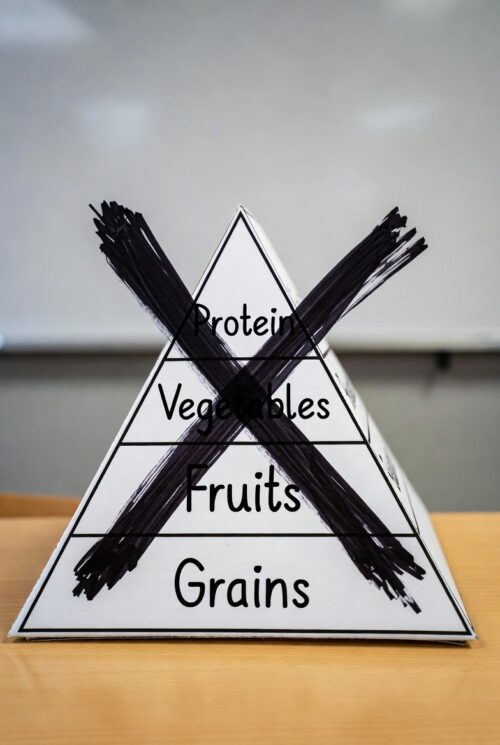
Fats are needed in the production of your essential hormones, testosterone, estrogen, and progesterone. Also, having a role in menstrual regularity. Fat won’t make you fat. Round-housing bear claws into your mouth will make you fat. Which brings us to the next topic, the all powerful, base to your pyramid, never could be the cause of disease, Carbs.
Carbohydrates. The misunderstood Macro
We were lied to. Carbs are not what we think. Although they are definitely necessary, the powers at be gave misleading info. Going back to the conversation on children, carbs are crucial for brain development. It thrives on glucose. The issue is the garbage fruit snacks, pure sugar juices, and processed trash fed to children. And the disturbing ingredients in baby formula. There is a massive difference between blueberries vs cheesy crackers shaped like animals and macaroni. Bread is evil. Tell yourself this. Get yourself to the point where even thinking about bread makes you second-guess life decisions up to that point. Bread is sugar. Sugar increases insulin. Too much insulin all the time equals diabetes. Eat quality carbohydrates like potatoes, fruit, vegetables, and fiber. Just eat real food. If it is in a box or has a list of ingredients longer than your life regrets, put it down.
Before this article turns into a 30-minute read, here are the closing thoughts:
Final Nutrition Priorities: Actionable Tips to Take Control
-Get as much of your nutrition as you can from real, whole food. There will be several articles to come, deep diving into all of the things discussed above.
-Start small, remove the muffins, and buy some berries. Chips and bread cost a lot of money in the grocery store, but even more in the pharmacy later down the road. Same for soda and juice. Sugar content in juice is right up there with soda. No need to add extra calories from drinking.
-Alcohol is 9 calories per gram, and your body does all it can to get rid of it. So everything else you eat gets side lined and stored.
-Prioritize protein, complete proteins that is. Stay fuller longer, and the body works overtime to metabolize it. You also build and retain more muscle, which in turn makes you able to burn fat more efficiently.
It isn’t that hard once you start making it part of life. Perception is reality, and it is good to see more than one outside our own. As of right now, we get one shot with this body, you own it, so make the decision that best suits you to keep it running strong.
Free Health Consultation and Blood Panel Review.
Take your health back. Build your knowledge and quit relying on big industry to tell you what is right for your body. Email us here for a free health consultation.