The Fat Myth Exposed: How We Were Tricked into Fearing Butter and Embracing Margarine
Ancel Keys’ Cherry-Picked Data: The Birth of the “Fat Makes You Fat” Lie
Long ago (not that long ago), we were duped. A simple idea that fat is bad, makes us fat, and gives us heart attacks. Thanks to the famous ego of Ancel Keys, who cherry-picked his data to begin the thriller saga, fat is bad, eat margarine and bread because it lowers cholesterol. He removed countries like France, who consume high amounts of butter ( minimally processed, not all butter at the store is good) and other fats, and have very low heart issues (the French Paradox, read more about it here). All to be the margarine era that started in the late 50s. This, among other dark secrets, fueled the engine for fat is bad, carbs are better. And the big food industry ate it up. Then began the marketing of “low-fat” cookies, breads, and all other nonsense that somehow people still fall for.
Sugar’s Dirty Secrets: How the Sugar Industry Bought Science to Blame Fat
John Yudkin’s Warning Ignored – The $50,000 Harvard Cover-Up Revealed in 2016
Now, magnify the 1960s. The Sugar Research Foundation (SRF, now Sugar Association) was sweating. Early studies by John Yudkin connected sugar, not fat, to heart disease, obesity, and diabetes. Sugar Reach Foundation couldn’t have that. So, they secretly funneled nearly $50,000 (about $420,000 today) to Harvard nutritionists Mark Hegsted and Fredrick Stare to review 1,500+ papers and rewrite the narrative. The foundation also ghostwrote multiple parts of it, and these documents remained undisclosed until being uncovered in 2016. Hegsted even admitted in internal docs that they aimed to “counter the growing tide of evidence implicating sucrose.” Interesting that in the 50s, diabetes was a rare disease, and in today’s society, it is a major public health issue. All for money? Let’s ask the tobacco industry.
Big Tobacco’s Sneaky Pivot: Engineering Addictive Junk Food with Cigarette Science
Philip Morris and R.J. Reynolds Invade Snacks – The Hyper-Palatable Food Boom
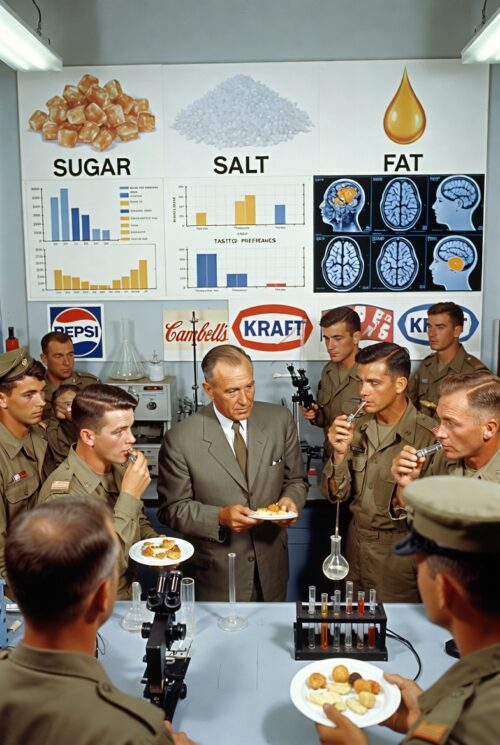
The plot thickens. In the 1980s and 90s, Big Tobacco was facing lawsuits for pushing ads that cigarettes are “healthy”, “safe, or ‘More doctors smoke Camels”. And what did they do? Pivoted to food via acquisitions. Philip Morris bought Kraft and General Foods. R.J. Reynolds snagged Nabisco. Major companies then merged. They didn’t just own snacks, they exported cigarette R&D, nicotine-like addiction engineering for “hyper-palatable” foods (combos of fat, sugar, salt). Low-fat mandates were a goldmine. Strip fat from Oreos or yogurt? Pump in sugar to keep them tasty. Tobacco-owned brands were 29% more likely to hit those addictive thresholds, per a 2023 Addiction study. Lobbying sealed it. Food giants (many tobacco-tied) poured millions into shaping guidelines, delaying trans-fat bans and sugar warnings. After they were forced to pay $206 billion and their stock prices tanked, they eyed up the weak target. Food industry. What a perfect transition to employ their addictive science experiments and project their dark marketing to the entire population. And with the industry having low regulation and high addictive potential, it was the perfect pivot to save their fat pockets.
True Benefits of Fat According to Research, Not Influence.
Why is this important? Well, because highly processed foods, especially carbs and sugar, wreak havoc on your body. But now that people don’t listen to the news for life advice from paid sources (or you do, the world needs you too), we can look at the actual research that shows fat is great for you. Without going full keto dork, let’s look at it for a second.
Why Healthy Fats Are Your Secret Weapon Against Heart Disease, Obesity, and Inflammation.
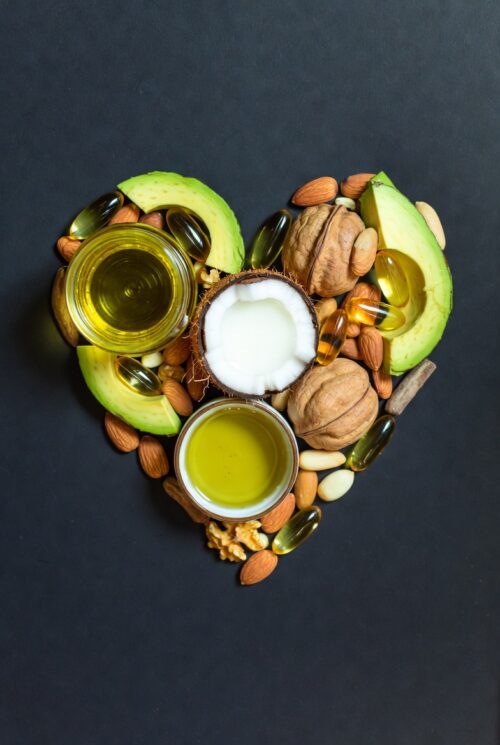
There are plenty of studies that show the benefits of high fats, and of those from a quality source. Like Olive oils, MCT oils, butter, quality beef, and plenty more. Just steer clear of seed oils. They’re a carpet bomb of inflammation. Quality fats can do a lot for you. A major effect is making your cholesterol particles themselves more fluid and larger in the blood. Isn’t this bad? Well, no, because the reason for plaque build up is due to cholesterol molecules becoming oxidized (mostly by constant insulin and glucose spikes), and that makes them crusty, sticky, and rigid. Fats, on the other hand, make these particles malleable and “fluffy”. So instead of getting stuck on your damaged endothelium (also from too much oxidation), they can bounce around and flow through your vessels like a herd of fluffy sheep. Oxidize the particles and crust up the endothelium? Then you get a parade of porcupines walking through a velcro tunnel.
Satiety Superpower: Why 9 Calories of Fat Fills You Up Better
Fat also has a great way of making you satiated (or feeling full). Sure, it packs a higher calorie count at 9 calories per gram of fat, but if you drink alcohol, that does way more damage systemically and also packs a high amount at 7 calories per gram. So fat will turn off the appetite alarm more efficiently by telling your body you have what it needs to be nourished. There are also many vitamins that hitch a ride in your body on fat and need them to be utilized. Just think “Fat ADEK”. Those fellas are always throwing up the hitchhiker sign to get a ride on fat.
Groundbreaking 2024-2025 Meta-Analysis: High-Fat Diets Crush Diabetes and Weight Gain
What about LDL being high? Well, we know that LDL isn’t the demon we make it out to be. It’s the poor soul trying to put out the fire that was created from ingesting too many processed foods and simple sugars (bread is one). In a recent meta-analysis from 2024-2025, people who were overweight and type 2 diabetics saw great results from switching to a high-fat. It lowered all the normal markers that the typical doc looks at. Triglycerides, blood pressure, and blood glucose. And also had a great effect on lowering insulin levels, body weight, and body mass index.
Lower Triglycerides, Blood Pressure, and Insulin – Even If LDL Rises (The Good Way)
The LDL cholesterol went up, but remember, it was a fluffy sheep bouncing, and hopping about in the tunnels of human anatomy. Not a porcupine posted up on the final turn, inviting his buddies to stick around. They measure this with a flow-mediated dilation. Which essential takes an ultrasound and a cuff to put pressure on your brachial artery (in the arm) and measure how it responds. This will show vascular tone, inflammation, and CVD risk. They can also pull out LDL from a blood panel and analyze its “fluffiness.
Fats for Hormones, Brain, and Beyond: Testosterone, PCOS Relief, and A1C Control
Fat also plays a key role in hormone transport and regulation in the body. You need it for the production of testosterone and signaling from your body to do so. Insulin is also a factor in this so no carbohydrates isn’t the answer. But removing processed ones is. You can do targeted carbohydrates as well. Timing them before or after your workouts allows for final insulin spikes and gives you all the benefits of muscle building and recovery with the needed signaling of hormone regulation. You also need to have fats for brain production and health. It helps reduce the symptoms of PCOS in women via the regulation of glucose spikes. And assists with the level of hemoglobin A1c, or the 90-day snapshot of a red blood cell, and the amount of sugar crusted to it.
Is Keto All Hype? Focus on Quality Fats from Real Food Sources
So is keto the way to go? Not necessarily. It depends. Also, it doesn’t mean that it opens the floodgate of all the nonsense keto snacks and bars that have popped up in the last 5 years. Focus on quality fats from food sources. And as we age, this may become even more important. Seeing that many things dramatically changed in the 60s and 70s age group. Ensuring our vessels and the stuff parading through them is healthy and not oxidized becomes much more important. All this to say we shouldn’t make carbohydrates the bad guy. Things like fruits and veggies, potatoes aren’t horrible, and some quality honey gives you a great way to assist with muscle growth, recovery, and the hormone signaling piece. Glucose is also needed in brain function. But absolutely, no doubt, highly processed carbs, sugars, and seed oils need to be scrapped. Statins shouldn’t be the first line of defense. Putting down the pudding spoon should.
Final Wake-Up Call: Stop Popping Statins. Put Down the Processed Pudding Instead
We sometimes have to let things go as they arrive, because nothing can be completely controlled. But to arm yourself with information for the protection of vitality in life isn’t so bad. Everything that goes into our bodies has a function, good or bad. And we have the option to make the decisions for good. If you choose to follow blindly, then you have set your headstone with the date prematurely.