
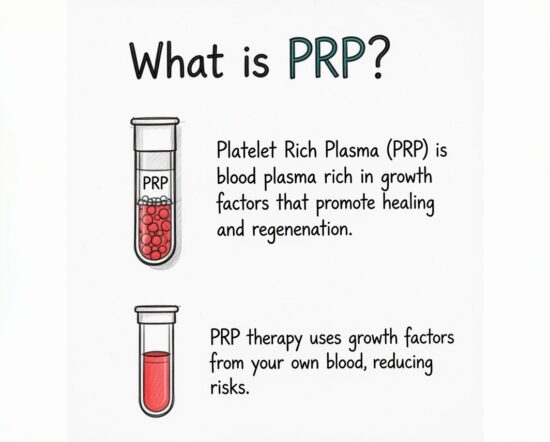
What is PRP? How does it heal the body and injuries?
PRP or platelet-rich plasma is a regenerative method to heal the body. Typically used for tendon injuries, osteoarthritis, and increase the healing factors of the body after surgery.
How does it work?
Platelets are tiny blood cells that play a crucial role in the clotting process. They also carry healing growth factors and messenger proteins that recruit the body’s healing mechanisms.
Once in the injury site, Platelets release growth factors that recruit repair cells to the damaged tissue. They also stimulate new growth in damaged areas, helping to rebuild the collagen matrix and assist in new tissue formation.
It also helps ramp up the inflammation cascade in a controlled manner, which helps restart stalled healing.
The combination of growth factors and nutrients suspended in plasma promote angiogenesis, or new vessel formation. This is extremely important in injuries of the tendons or ligaments due to the fact that these have very few vessels going to them. Our vessels are important highways to carry oxygen and nutrients to tissue required for growth and healing.
One of the key drivers of this is VEGF (Vessel Endothelial Growth Factor).
This helps build micro-vessels in the damaged tendon.
This is extremely important because it will promote vessel growth in an area that has very little vasculature. This means more blood flow, and therefore more oxygen and nutrients to the area needing repair. to build back damaged tissue, boost growth, and even restart the healing cascade to previously scarred tissue.
The PRP also recruits protein messengers to tell the body to heal the area. It’s like a construction foreman rounding up the crew to get the build complete. All this is resting right inside your blood, waiting to help repair your body.
Why is it effective vs just letting the body do its thing?
Well, your blood is drawn out, and the goal is to get the maximal concentration of the PRP. This is accomplished by being drawn, and then the blood is spun in a centrifuge. It rotates at a high RPM for several minutes, and this separates all the blood products. Red blood cells or erythrocytes, leukocytes, platelet-poor plasma, and platelet-rich plasma.
The platelets are only about 1-2% of the total blood product volume, so spinning them properly is key. Typically, clinics only do one spin and use a kit with a separator in it. This is not advantageous, and the most effective and beneficial method is to spin about 60cc’s of blood, two times with a horizontal centrifuge.
This allows for the optimal concentration of platelet-rich plasma to be drawn out of the vial and then injected into the problematic area.
Things to consider when finding a PRP clinic.
– Ensure they do the procedure ultrasound guided.
– The use of lidocaine is not positive. Lidocaine has a negative effect on the platelets.
Often, I have come across providers who “ Go off feel” for the injection. This is problematic for multiple reasons, but the biggest being that they don’t have Superman’s X-ray vision, so this remark does not explain how they are seeing exactly where the damaged area is.
Studies back this up. Ultrasound-guided (US) tendon injections offer significantly higher accuracy, often >90%, compared to non-US (blind/landmark-guided) injections, which can have accuracy rates as low as 30%. https://pmc.ncbi.nlm.nih.gov/articles/PMC11367678/
The likelihood of injecting into the injury site dropped a significant amount vs the ultrasound-guided method. But without knowing this, we assume the provider is doing the best they can for us. And in reality, this is a less effective approach, and time is money. The quicker the procedure, the more people can get seen.
A common remark is “ I know I hit the right spot when I feel a large amount of resistance.” You are going to feel resistance no matter the tissue you are penetrating, so this is an immediate red flag. And often clinics are charging a surprisingly high price for this procedure. If I am investing in my body for long-term health, the provider should be using the most efficacious methods.
Another common mishap is the use of lidocaine, or an anesthetic ( a compound that numbs specific body areas by blocking nerve signals) in the procedure. It is used due to the fact that injection right into a tendon is not a pleasant feeling. But the use of these agents reduces the amount of cell proliferation in the injured area. https://pubmed.ncbi.nlm.nih.gov/22264830/
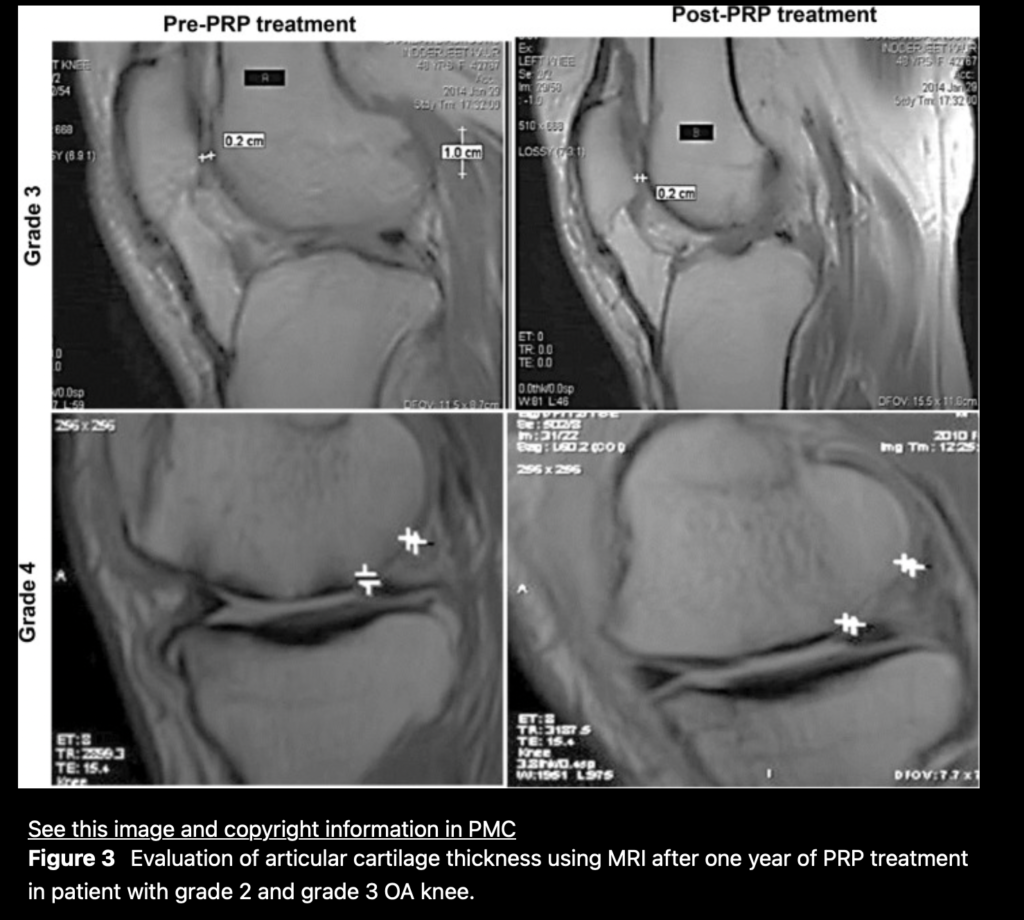
Again, not a method that is optimal when you are investing in a proven procedure to heal your body. There is substantial literature showing the beneficial results of PRP treatment. A substantial improvement in osteoarthritis has been shown, actually thickening the articular cartilage in the knees. This is quite incredible due to the fact that this area of cartilage is challenging to heal, seeing that it is avascular and receives nutrients via diffusion of the synovial fluid.
PRP vs Cortisone Injections.
Of note, cortisone injections have shown to deteriorate this cartilage, and it has a catabolic effect on many other factors that result in negative effects long term. I personally have been offered them twice for separate injuries and declined both times due to the long-term outcomes of
injury increase. Check out this video I did for a deep dive on how they negatively impact the body.
And check out the blog on cortisone shots.
What’s the Research On PRP show?
The research for PRP goes back 20-some years, yet we still hear that the science isn’t out on it yet. Personal experience being told this after surgery by the orthopedic surgeon. The other orthepidc center offers and promotes it for healing, and they work with professional athletes. Like many things in life, medicine and health are no different in the fact that we are human, we have our opinions that create our perception of things, and that is how we base our decisions.
I bring this up because it’s beneficial to educate ourselves, especially in the world of health, since it is incredibly nuanced, personalized, and controversial. Things are ever changing. Don’t be stuck to one method.
Arthritis Potential and Knee Pain Reduction with PRP
One huge factor in the argument for PRP is the fact that osteoarthritis in the knees is the number one disability globally. This is significant because the frontline defense is typically a cortisone shot. This is shown to do more damage than good, and in the long term, you are hindering your ability to heal. Therefore, leading to a potential surgery in the future.
As mentioned before, articular cartilage is extremely challenging to heal, and the corseting inhibits cartilage growth and nutrient delivery in the joint.
PRP has shown to thicken the cartilage of the knee, preventing further degradation and potent for bone-on-bone in the joint.
Arthritis, Pain, and Healing Long Term.
Long-term health is an investment. And often we think of the quick fix as what we need. Strength training, physical therapy, and regenerative treatments like PRP show much more benefit to long-term bodily health and injury prevention compared to cortisone injections.
Much like anything in life, to change our current situation, we have to outpace the old habits with the new ones we want to achieve. Consistency is a powerful disruptor and often results in success.